(
(
Design Process
Design Process
)
)
ID-15 Engineering the M-Shade Monolith
ID-15 Engineering the M-Shade Monolith
A sculptural study.
A sculptural study.
by
Alessandro Folisi
3
min read
When we began developing the M-Shade, we were confronted with a fundamental choice: do we assemble a shape, or create a volume?
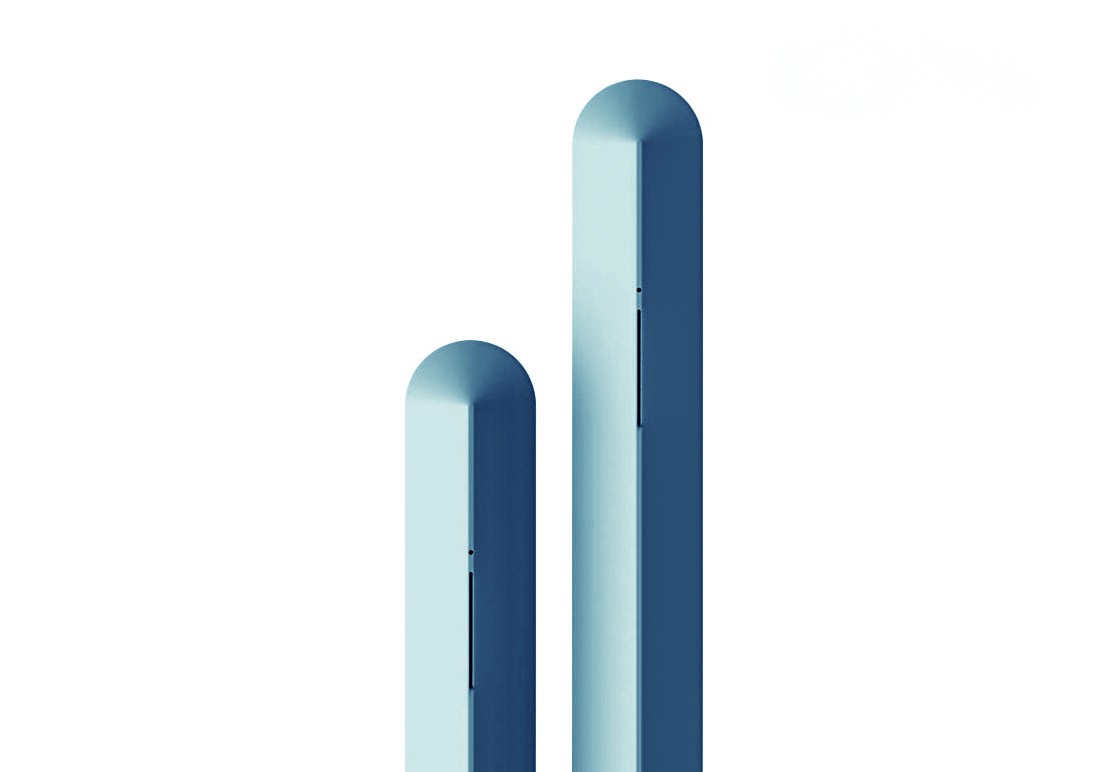
The market is saturated with the "banal solution"—the ubiquitous aluminum extrusion capped with visible three-dimensional end-plates. To us, this felt like an interruption of the object’s spatial integrity. We sought a pure tridimensionality, a singular tectonic expression that felt carved rather than assembled.
Our primary objective was to maintain the continuity of the shade’s profile across its entire 60-inch span. Standard manufacturing would suggest welding multiple components or utilizing heavy extrusions, but these methods carry the "scars" of production—seams that require intensive polishing and grinding to hide.
Instead, we looked toward high-precision large-scale molding. By using a massive, custom-engineered die, we are able to transform a flat sheet of 3mm aluminum into a complex, rigid volume in a single, decisive stroke.
The selection of 3mm aluminum was a calculated decision in structural efficiency. We required the luminaire to be:
Lightweight: Ensuring ease of installation and minimal material use.
Rigid: Maintaining a perfect horizontal datum over 60 inches without deflection or warping.
At this scale, the material physics are unforgiving. The rigidity of the M-shade isn't derived from the thickness of the metal alone, but from the geometric tension created during the stamping process. The mold forces the aluminum to its structural limit, "locking" the form into a state of permanent stability.
Perhaps the most significant achievement of the M-Shade manufacturing process is what is absent. By mastering the precision of the mold, we have eliminated the need for welding or polishing
There is no filler, no masking, and no decorative concealment. The crispness of the edges and the uniformity of the radii are a direct reflection of the tool’s precision.
"The goal was to achieve a level of manufacturing where the process itself becomes invisible, leaving behind nothing but the pure design intent."
When we began developing the M-Shade, we were confronted with a fundamental choice: do we assemble a shape, or create a volume?
The market is saturated with the "banal solution"—the ubiquitous aluminum extrusion capped with visible three-dimensional end-plates. To us, this felt like an interruption of the object’s spatial integrity. We sought a pure tridimensionality, a singular tectonic expression that felt carved rather than assembled.
Our primary objective was to maintain the continuity of the shade’s profile across its entire 60-inch span. Standard manufacturing would suggest welding multiple components or utilizing heavy extrusions, but these methods carry the "scars" of production—seams that require intensive polishing and grinding to hide.
Instead, we looked toward high-precision large-scale molding. By using a massive, custom-engineered die, we are able to transform a flat sheet of 3mm aluminum into a complex, rigid volume in a single, decisive stroke.
The selection of 3mm aluminum was a calculated decision in structural efficiency. We required the luminaire to be:
Lightweight: Ensuring ease of installation and minimal material use.
Rigid: Maintaining a perfect horizontal datum over 60 inches without deflection or warping.
At this scale, the material physics are unforgiving. The rigidity of the M-shade isn't derived from the thickness of the metal alone, but from the geometric tension created during the stamping process. The mold forces the aluminum to its structural limit, "locking" the form into a state of permanent stability.
Perhaps the most significant achievement of the M-Shade manufacturing process is what is absent. By mastering the precision of the mold, we have eliminated the need for welding or polishing
There is no filler, no masking, and no decorative concealment. The crispness of the edges and the uniformity of the radii are a direct reflection of the tool’s precision.
"The goal was to achieve a level of manufacturing where the process itself becomes invisible, leaving behind nothing but the pure design intent."